Guide to gemstones: precious, fine and inclusions
About to buy a gemstone? Take a few minutes to understand what you are looking at. The world of gems has its own vocabulary, pitfalls and subtleties. This guide gives you the keys to make an informed choice.
What is a gemstone?
A gemstone is a mineral — or more rarely an organic material such as pearl, amber or coral — that combines three essential qualities: beauty (colour, brilliance, transparency), rarity and durability (hardness sufficient to be cut and worn).
Precious, fine, ornamental: the French classification
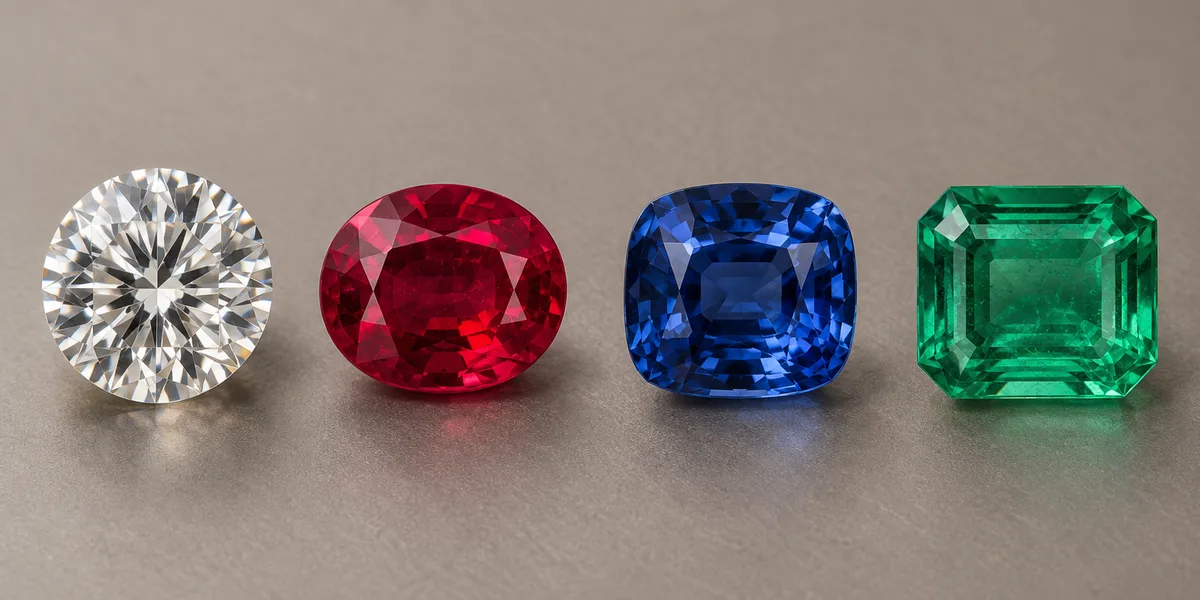
Precious stones
French law (decree of 14 January 2002) recognises only four "precious" stones: diamond, ruby, sapphire, emerald.
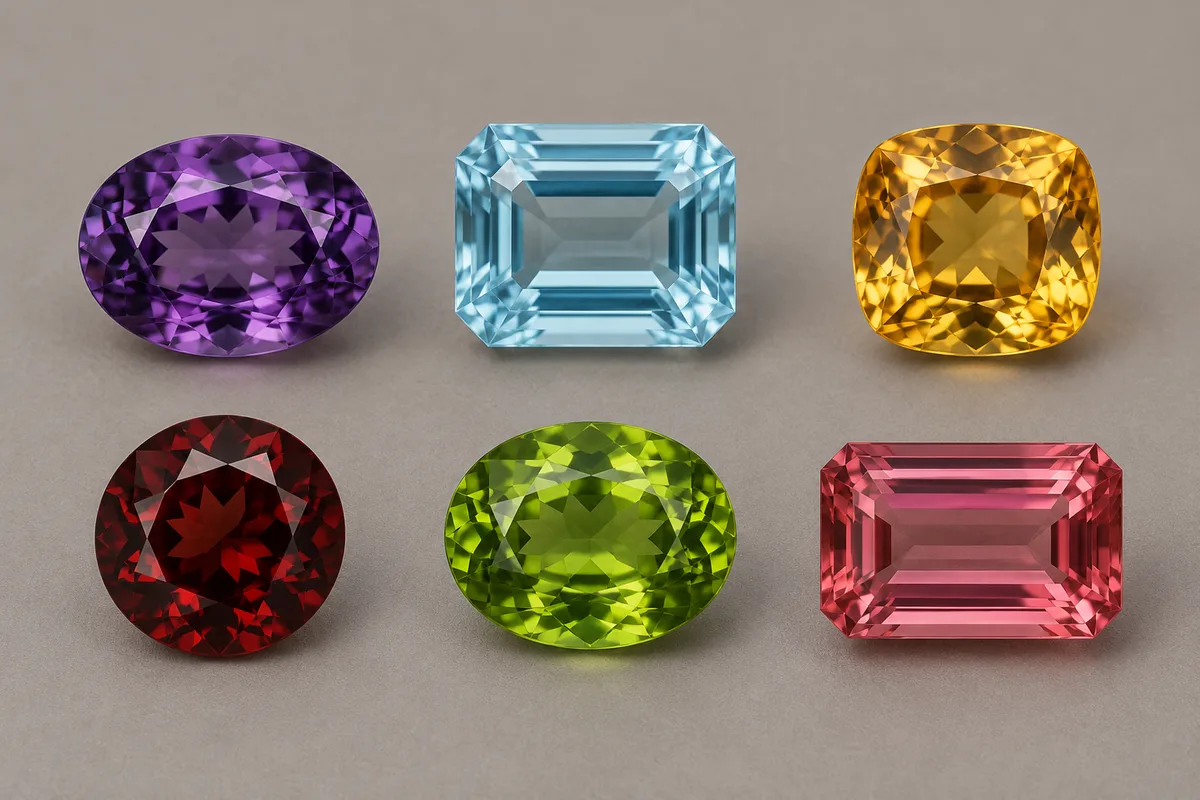
Fine stones
All other transparent or translucent gems used in jewellery are called fine stones (the old term "semi-precious" is now banned): aquamarine, amethyst, citrine, garnet, peridot, tanzanite, topaz, tourmaline, opal, spinel, zircon, and so on.
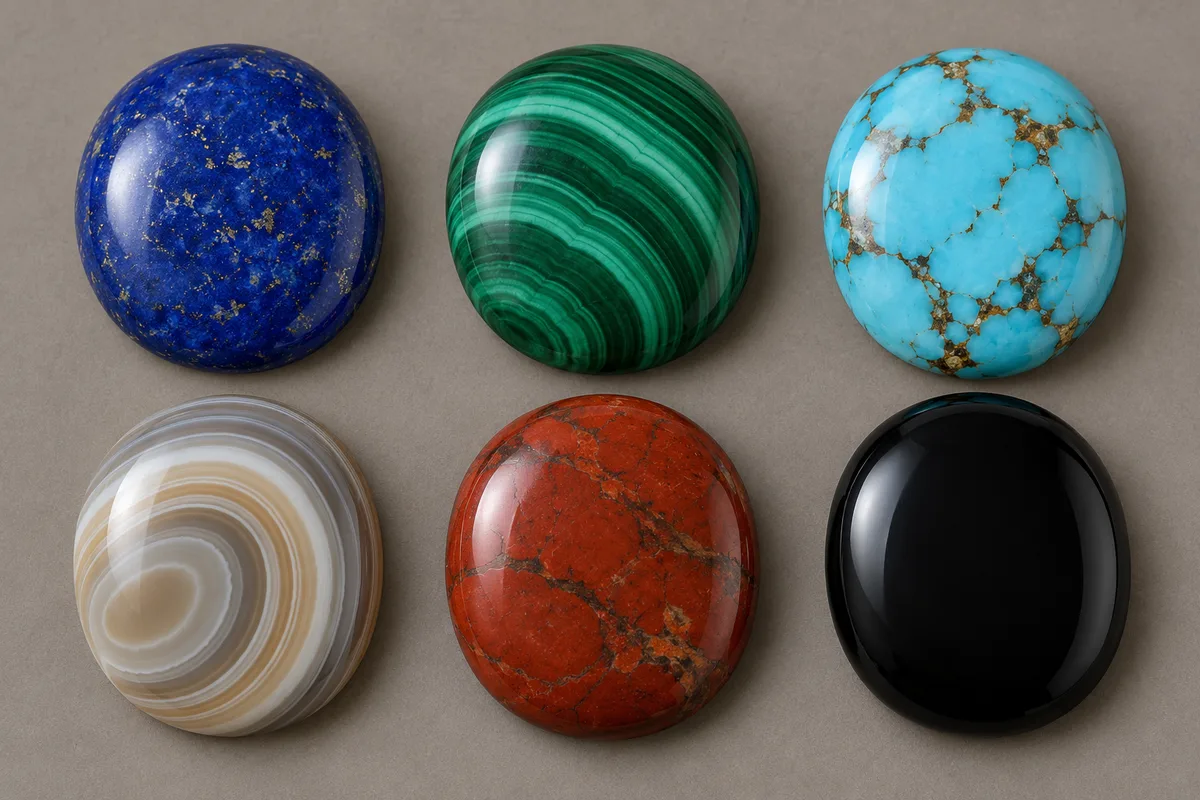
Ornamental stones
Opaque stones cut as cabochons or beads (agate, lapis lazuli, malachite, turquoise…) are called ornamental stones.
Inclusions: flaws or signature?
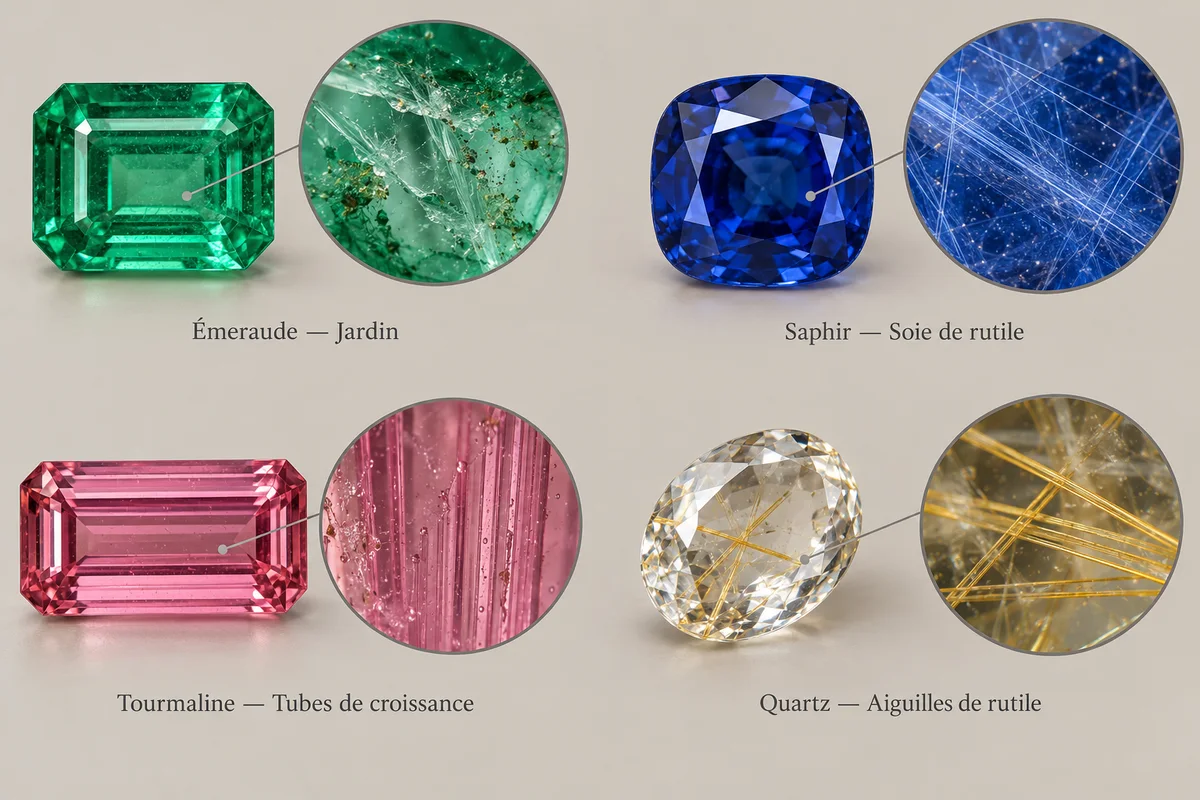
An inclusion is any foreign element trapped inside the stone during its formation. Fewer inclusions usually means a higher price, but inclusions are also the proof of natural origin: a perfectly clean stone is often suspicious. Some inclusions even have their own names and increase value (the "garden" of emeralds, the "silk" of Kashmir sapphires, rutile needles in quartz). Always look at a stone with a 10x loupe before buying.
The 4Cs and beyond
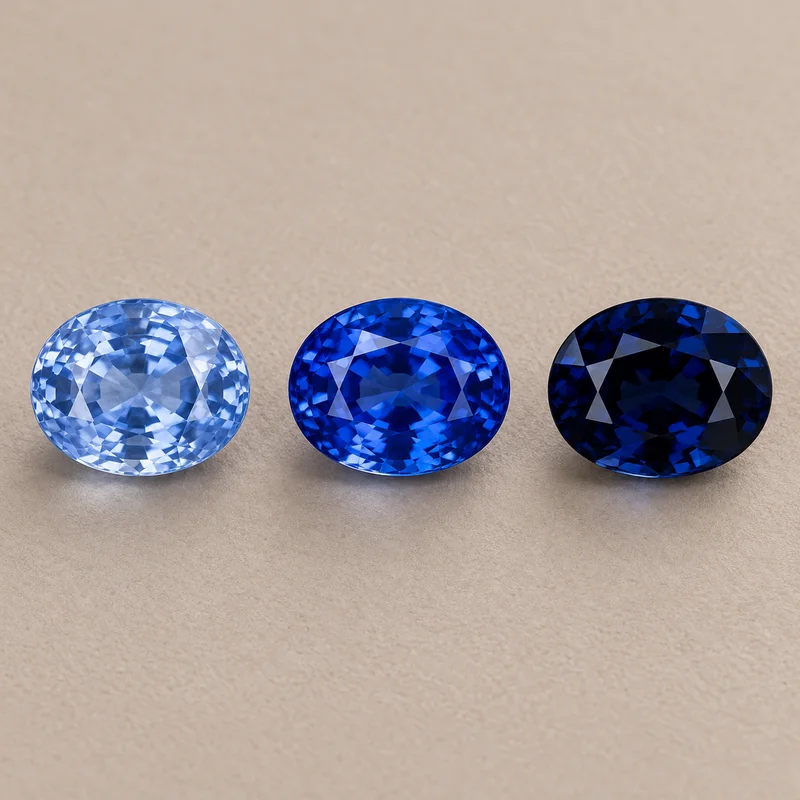
Colour
Hue, saturation and tone. The most important criterion for coloured stones.
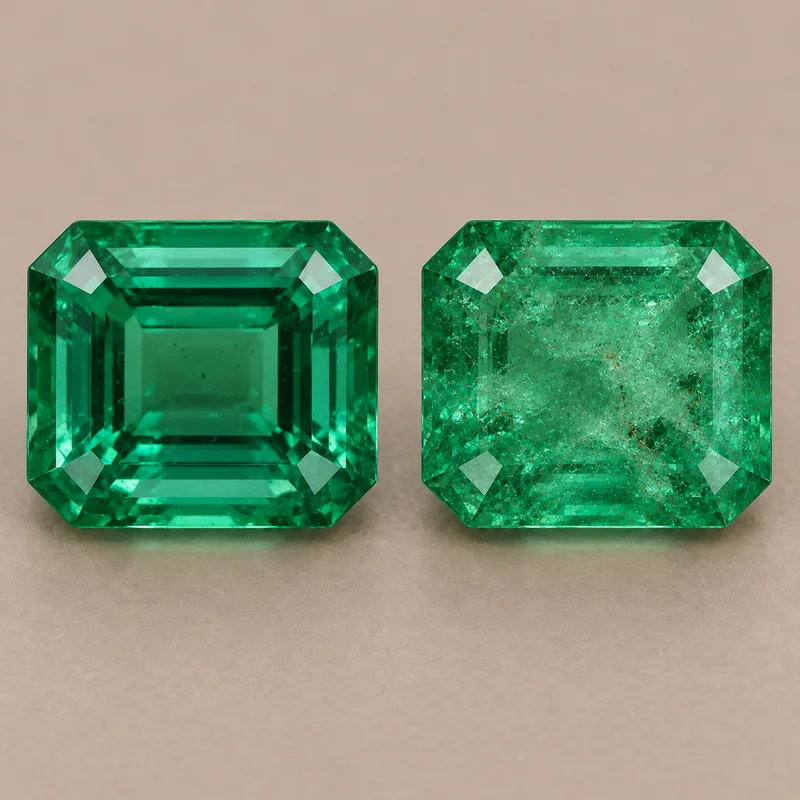
Clarity
Absence of visible inclusions. Important but not always decisive.
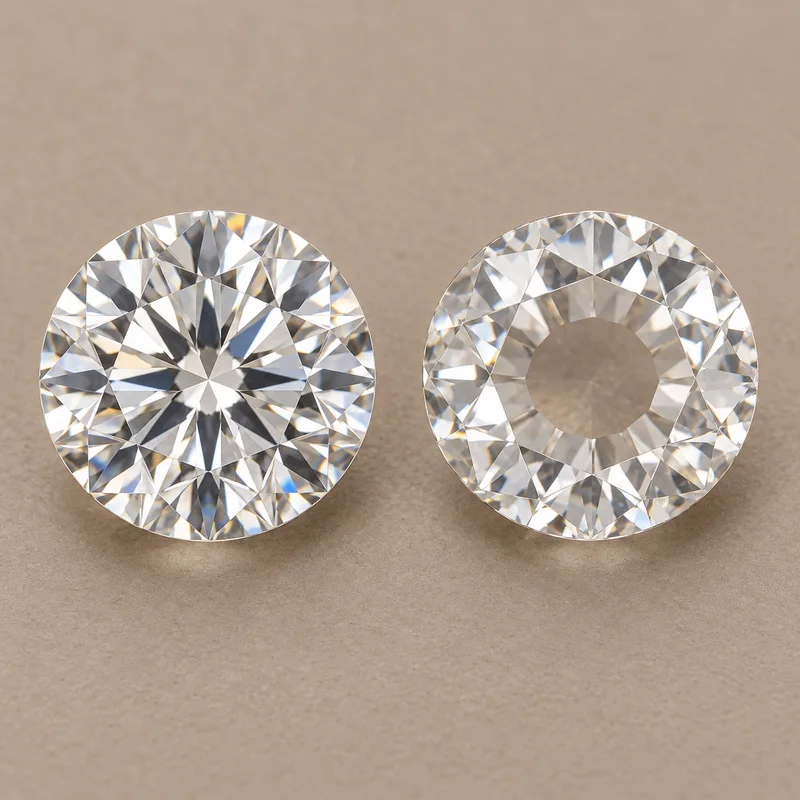
Cut
A good cut reveals brilliance and fire. A poor cut kills the stone.
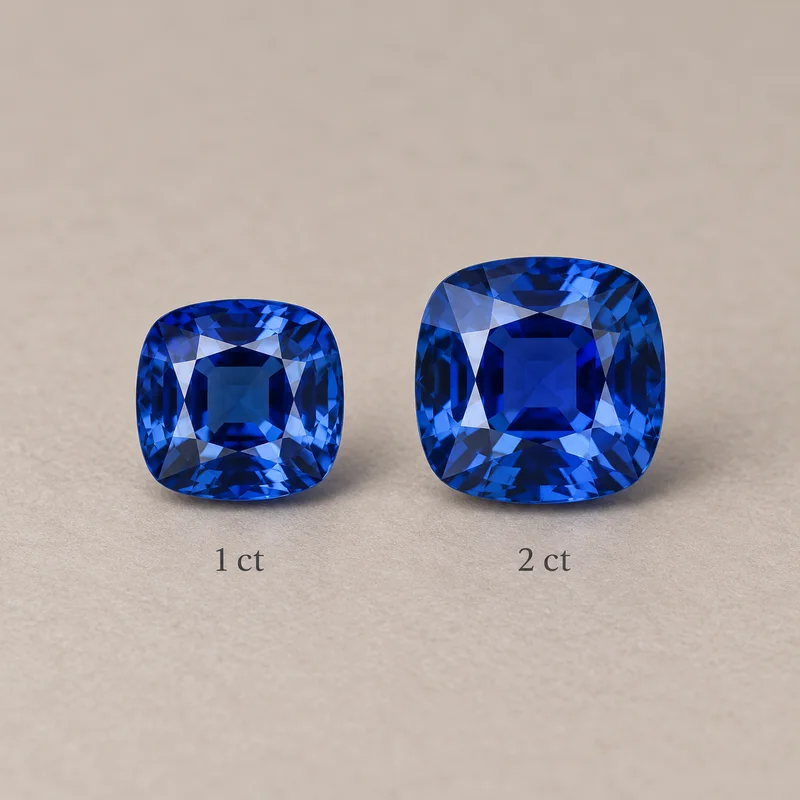
Carat
Weight (1 ct = 0.2 g). Price per carat is not linear: large stones are exponentially rarer.
Treatments: a key topic
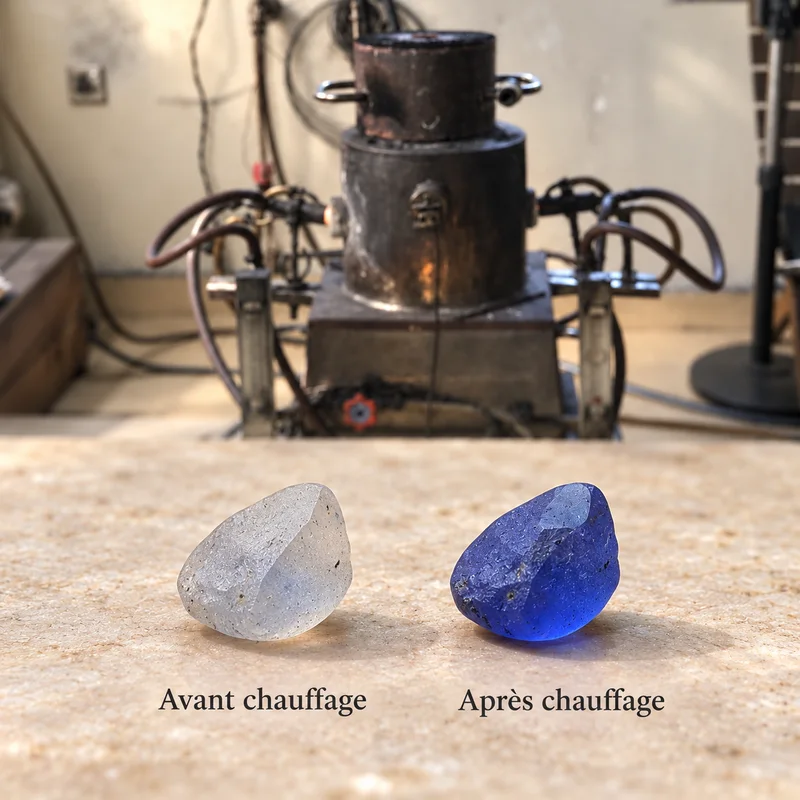
Most gemstones on the market are treated to enhance colour or clarity. Some treatments are widely accepted (heating of sapphires and rubies), others are controversial (deep oiling of emeralds, beryllium diffusion, irradiation). A serious seller must disclose all treatments. When in doubt, request a certificate from an independent laboratory (LFG, GIA, SSEF, Gübelin…).
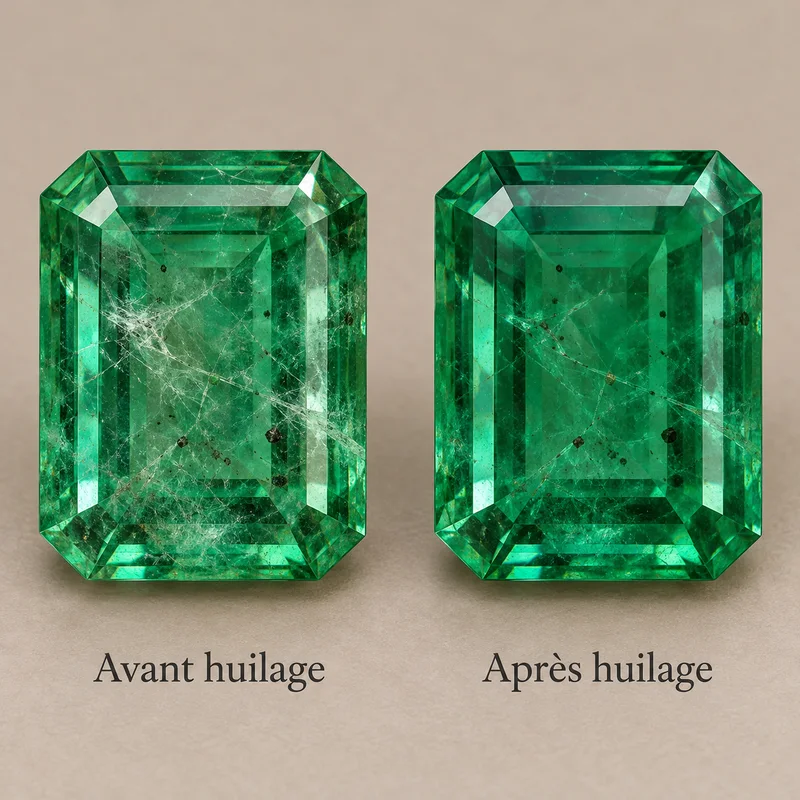
Oiling of emeralds
Almost all emeralds have fractures that reach the surface. They are filled with a colourless oil (traditionally cedarwood oil) or a resin: light no longer reflects inside them, the fractures become almost invisible and the stone looks cleaner. This treatment is very common and tolerated, provided it is disclosed, but it is not permanent: heat, solvents or ultrasonic cleaning can bring the fractures back. A certificate states the degree of oiling (none, minor, moderate, significant).
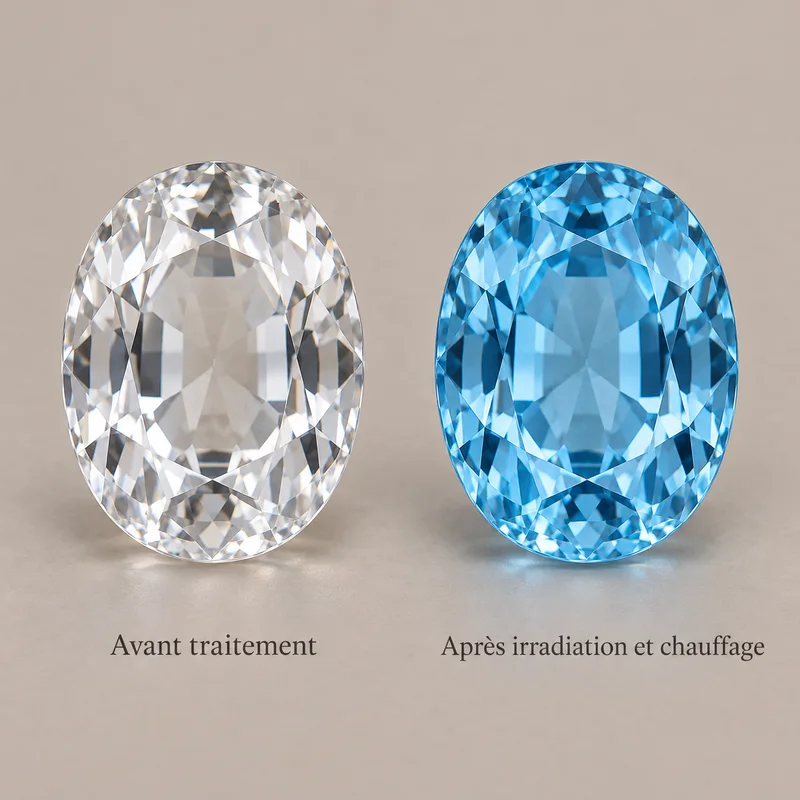
Irradiation of topaz
Natural blue topaz is extremely rare: the blue topaz on the market is almost always colourless topaz that has been irradiated and then heated, giving it a sky to deep blue colour (“Sky”, “Swiss”, “London Blue”). The colour is stable and the stone is not dangerous: irradiated stones are tested and held in quarantine before sale. This treatment explains the affordable price of blue topaz; it too must be stated on the invoice.
These three cases are only a few examples: many other treatments exist, such as diffusion (notably with beryllium), filling fractures with lead glass, dyeing, bleaching and resin impregnation (jade, turquoise), surface coatings or high-pressure high-temperature (HPHT) treatment of diamonds. Hence the importance of a transparent seller and, for a valuable stone, a laboratory certificate.
What to check before buying
- Origin — Colombian emerald, Kashmir sapphire, Burmese "pigeon blood" ruby command a premium.
- Certificate — for any meaningful budget, request an independent lab report. Above all, make sure the laboratory is recognised (LFG, GIA, SSEF, Gübelin, AGL…): fake certificates circulate, and some unscrupulous laboratories issue lenient reports. Where possible, check the report number on the laboratory’s website.
- Price consistency — a deal too good to be true never is.
- Setting — make sure the mounting does not hide a major flaw.
- Seller — choose a professional who explains, provides a detailed invoice and discloses treatments.
In short
A beautiful stone is not necessarily the most expensive or the rarest. It is the one that speaks to you, sparkles in daylight, whose origin and treatments you understand, and which you buy from someone you trust. Take your time. A gemstone can travel through several generations — make sure you pick the right one.